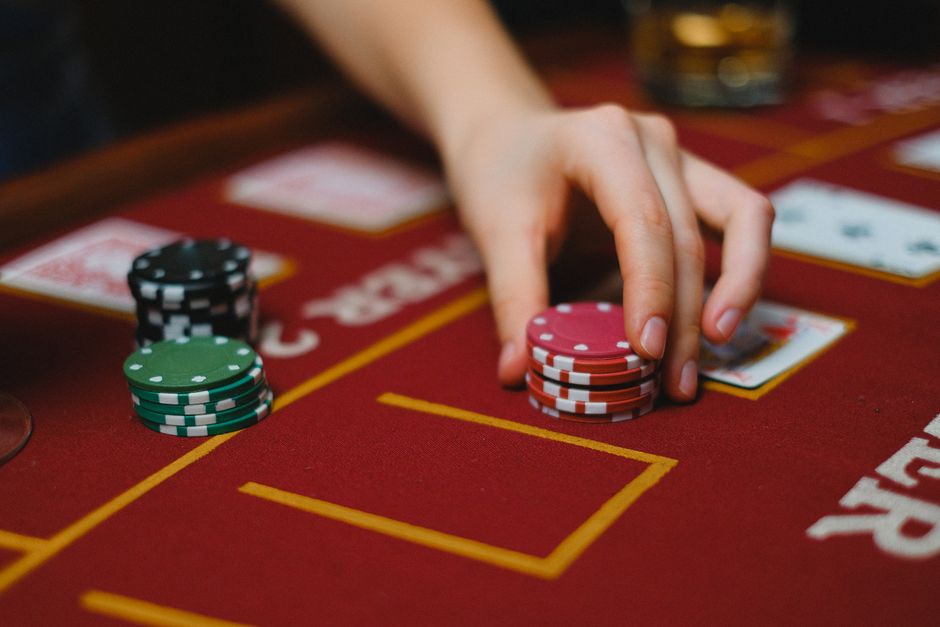


Ask ten recreational gamblers why they lose money online and you'll get ten variations of the same answer: bad luck. Ask anyone who has actually turned a profit over a twelve-month stretch, and you'll hear something entirely different. They talk about volatility, house edge, bonus terms, and bankroll math. They talk about treating a casino the way a seasoned investor treats a stock portfolio — as a series of calculated positions, not a lottery ticket with a roulette wheel attached.
The uncomfortable truth is that most people lose not because the games are rigged, but because they never bothered to understand how those games actually work. This article is about closing that gap.
Every game you play online has a built-in mathematical advantage for the operator. That's not a conspiracy; it's how the business stays in business. What matters is that the size of that advantage varies wildly, and the difference between a 0.5% edge and a 5% edge over a thousand bets is enormous.
Look at that list again. If you're grinding out hours on American roulette and wondering why your balance evaporates twice as fast as your friend's European roulette session, now you know. The game itself decided that for you before you placed a single chip.
The practical takeaway isn't “only play blackjack.” It's that you should know, roughly, what you're paying for entertainment. If you love slots, fine — but budget accordingly, because slots are a high-cost hobby compared to baccarat.
House edge tells you the long-run cost. Volatility tells you the ride. A low-volatility slot might pay small amounts frequently, giving you long sessions and gentle swings. A high-volatility slot like many of the Megaways titles can go fifty spins without a hit, then drop a 500x multiplier out of nowhere.
Why does this matter? Because most players judge a game by what they see in a twenty-minute window — and twenty minutes tells you almost nothing. High-volatility games require a bigger bankroll to survive the dry spells. If you sit down with $50 and play a 9/10 volatility slot at $2 per spin, your session will probably end abruptly. The same $50 on a low-volatility 3-reel classic might last two hours. For practical tips, check out สล็อตเว็บตรง.
Match bet size to bankroll. A common guideline is that your bankroll should cover at least 200 bets for low-volatility games and 400+ for high-volatility ones. That means a $2 spin on a volatile slot implies a bankroll around $800. Most people don't do this, which is precisely why so many sessions end in frustration rather than entertainment.
Welcome bonuses are the iGaming industry's favorite bait. A 200% match up to $500 sounds spectacular until you discover that you must wager your deposit plus the bonus 40 times before withdrawing a cent. Do that math with $100 deposited and a $200 bonus: you're required to bet $12,000. If the slots you like carry a 4% house edge, your expected loss on that wagering requirement is around $480.
That doesn't automatically make bonuses bad. It makes them conditional.
Bear in mind the market. Licensed European operators generally operate under stricter advertising rules than offshore sites, which means their bonus terms tend to be more transparent. If a bonus document is written in three different font sizes, designed to make you miss the important parts, that's a message in itself.
Poker gets lumped in with slots and roulette, and that's a category error. In pure chance games, you're playing the house. In poker, you're playing other people, and the house just takes a cut. That distinction has massive implications.
A competent low-stakes poker player can beat the game. A 5bb/100 win rate is achievable at cash tables if you're disciplined. But here's the catch: the rake eats into that. Many micro-stakes games are effectively unbeatable for a serious grinder precisely because the rake consumes the entire edge.
If you're learning poker, spend your first few months entirely on selection — choosing soft tables, playing at profitable hours, avoiding reg-heavy pools at higher stakes. The money in online poker today is not made by outplaying everyone, but by outplaying the specific people who sit in front of you regularly enough to profit from their mistakes. Tournament variance is brutal — the vast majority of entrants never make the money in any given event — so you must be prepared for a grind that feels like an emotional rollercoaster until the numbers settle out over thousands of hands.
The math matters, but it's worthless if your decision-making collapses three hours in. Tilt is real. So is chasing losses and the near-miss reflex that online slots cultivate with every almost-win animation. Casinos design those experiences to keep you engaged, not to help you make clear-headed decisions.
Some practical protections:
The difference between a losing player and a break-even one isn't talent — it's awareness. It's knowing that game choice matters, that volatility shapes your session more than the RTP number, that bonuses are often wolf-in-sheep's-clothing, and that poker is an entirely different animal from spinning reels. If you're going to spend money on entertainment, it's worth understanding exactly what you're buying.
None of this guarantees a profit. Nobody serious would tell you otherwise. What it does is guarantee you won't be fleeced through pure ignorance — and in an industry engineered to exploit exactly that ignorance, that alone puts you ahead of the majority still chasing on a double-zero wheel at six in the morning.

Hut Almanac shares practical, down-to-earth guidance on garden huts, cabins and outdoor retreats for readers across the UK.


Leave A Comment